
Box Braids vs Knotless Braids: Which Is Better?
Disclosure: Some of the links in this post are affiliate links. This means if you click on the link and purchase an item, I will receive an affiliate commission at no extra cost to you.
You might have made your choice between knotless braids and box braids before now, but after this teaching, you will know if you made the right decision or not.
A lot of people choose between these two styles based on what they see on social media or what their friends are getting done.
They don’t actually understand the differences between the two. Because of that, they end up with a style that doesn’t suit their hair, their scalp, or their lifestyle.
Both box braids and knotless braids are beautiful styles. Both are protective and both can last several weeks with the right care. But they are not the same style and they don’t work the same way on your hair.
The installation method is different. The tension on your scalp is different. The cost, the wear time, the takedown process, and the way they sit on your head are all different in ways that matter for your hair health.
Understanding those differences clearly is what this post is about. Not to tell you one style is better than the other in an absolute sense, but to give you enough information to make the right choice for your specific hair.
By the end of this guide, you will be able to make a genuinely informed decision rather than just following a trend or copying what someone else is doing with their hair.
Before diving in, read Knotless Braids: Complete Beginners Guide alongside this post. It gives a full breakdown of the knotless braid installation process that adds important context to everything covered here.
Box Braids vs Knotless Braids: Which Is Better?
What Are Box Braids
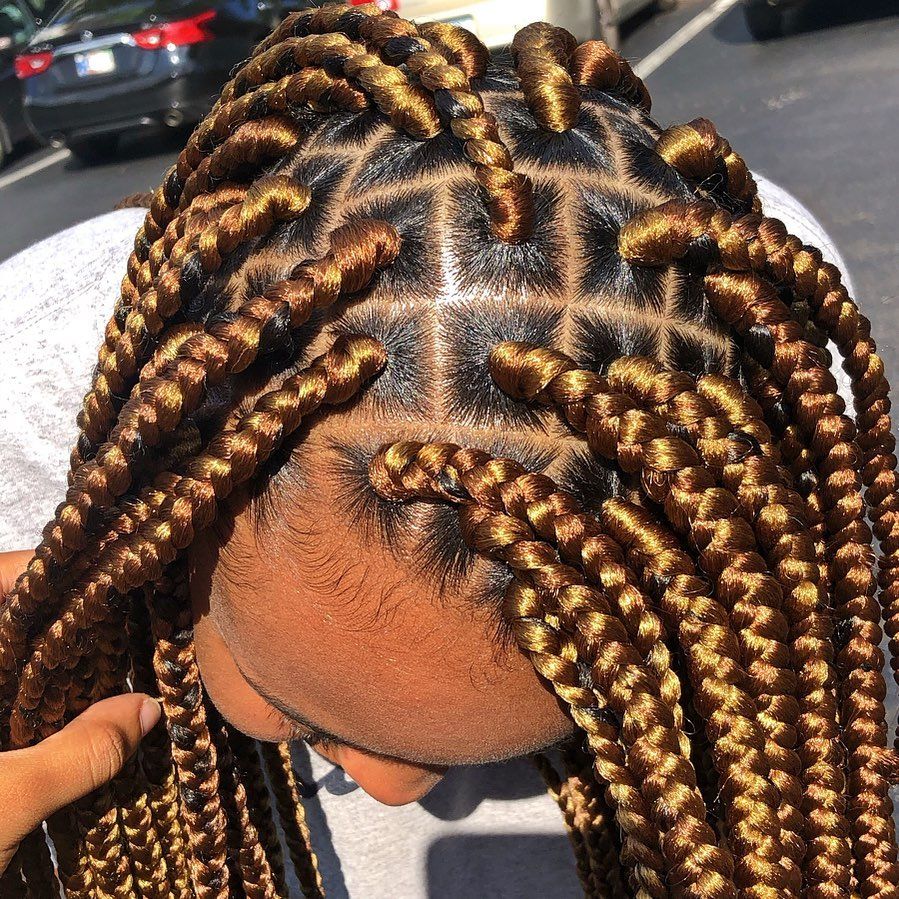
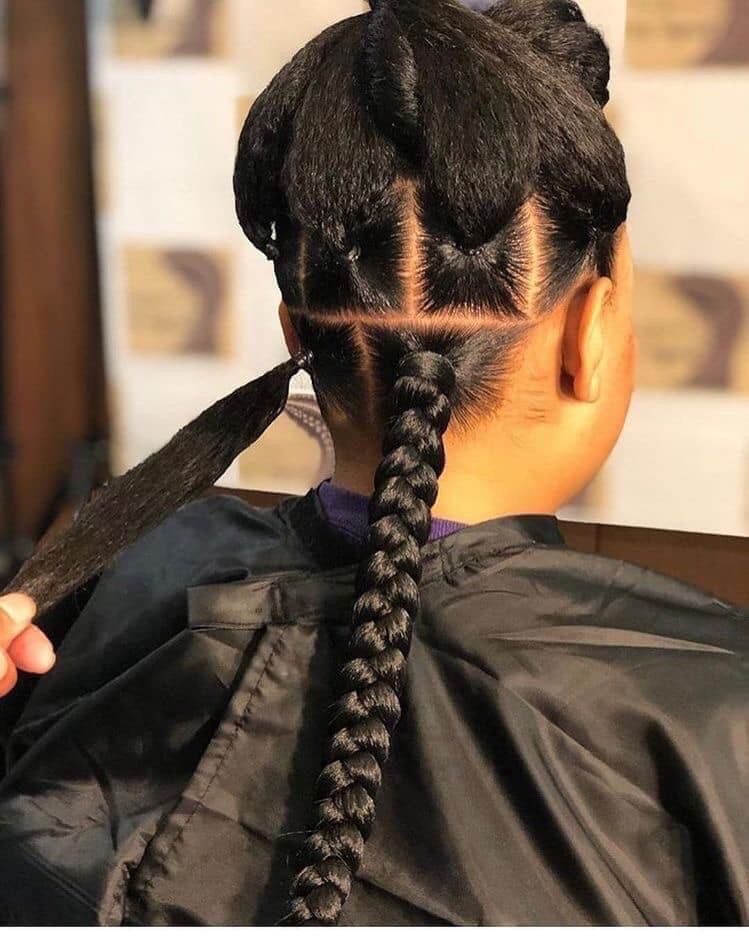
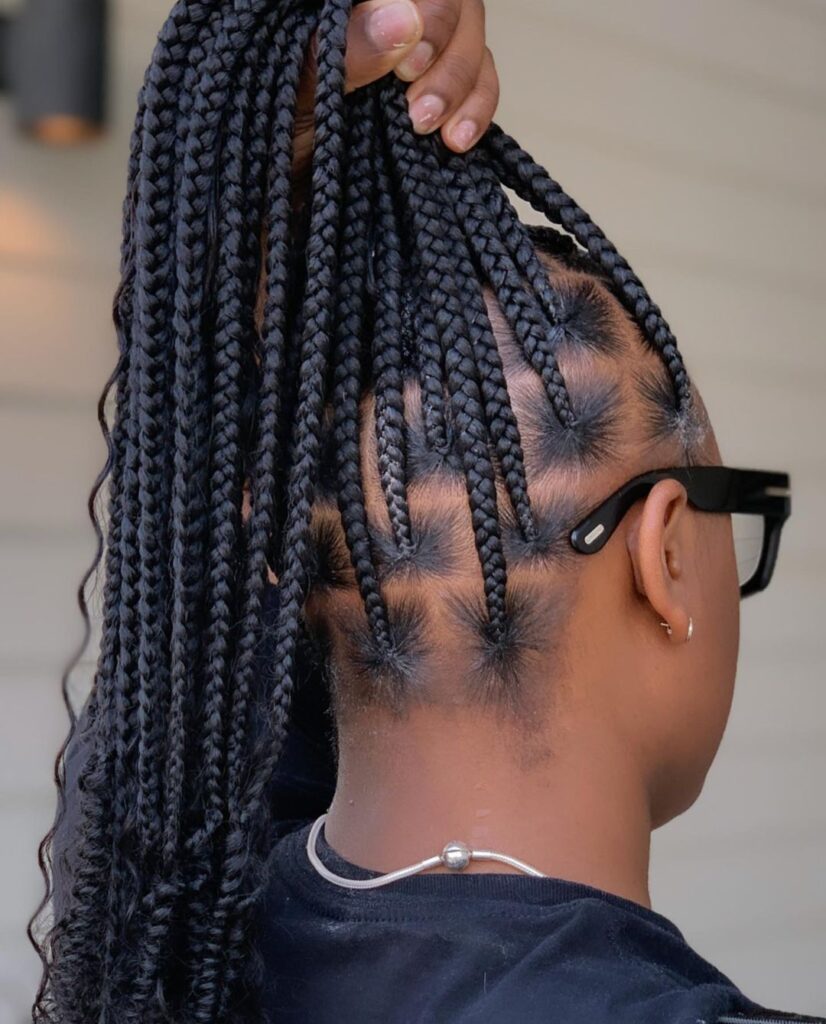
Box braids are individual braids installed in square sections all over the head. Extension hair is attached at the very root of each section using a knot before braiding begins.
The braider folds a piece of extension hair in half and loops it around the natural hair at the root. It is tied or knotted tightly at the base before braiding continues down the length of the section.
This means each braid starts with a visible knot right at the scalp. The majority of the extension hair weight is concentrated at the root from the very moment installation begins.
Box braids are one of the most iconic and widely recognized natural hair styles in the world.
They have been worn and loved by people with Afro hair for decades and remain incredibly popular globally.
They can be installed in small, medium, large, and jumbo sizes. And also, they come in a huge variety of lengths, colors, and styles that give enormous flexibility in terms of the finished look.
If you want to understand exactly how protective styling works for Afro hair generally, read Everything You Need to Know About Protective Styling.It sets up the foundation for everything discussed in this guide.
What Are Knotless Braids
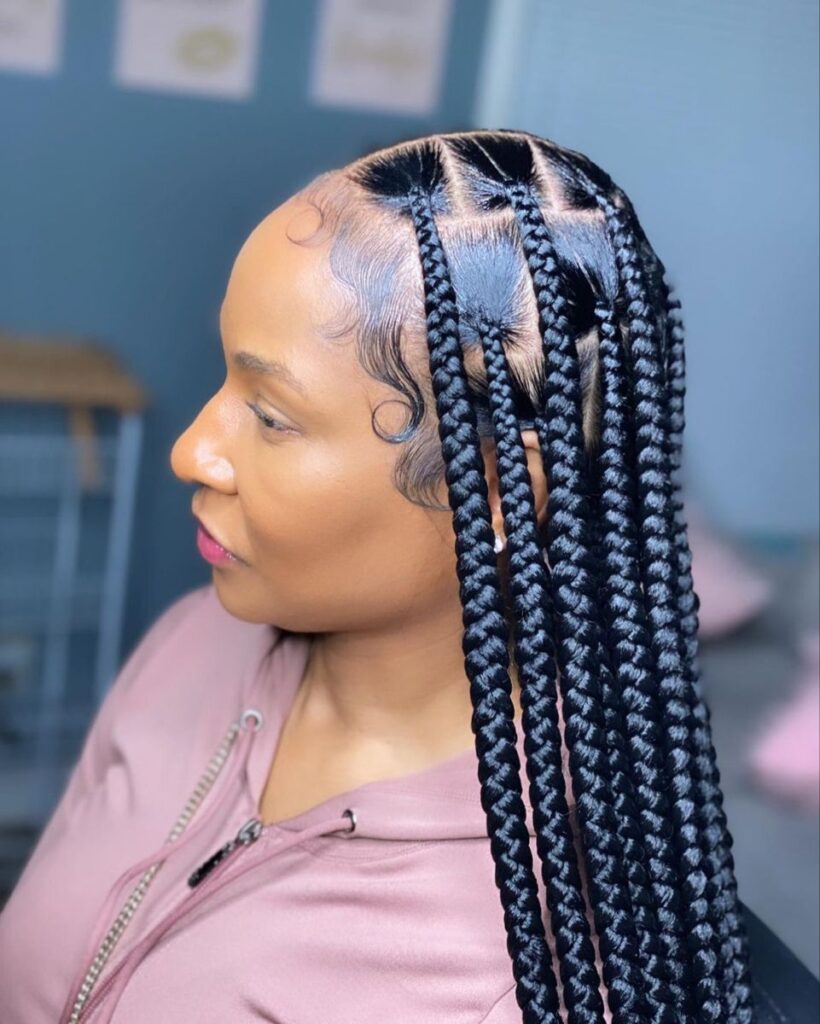
Knotless braids are also individual braids installed in sections across the head with extension hair added for length and fullness.
The key difference is that extension hair is fed in gradually rather than knotted at the root at the beginning.
The braider starts each section by braiding just the natural hair for a few passes from the root downward. Then small pieces of extension hair are gradually fed into the braid as it progresses.
This builds thickness slowly over the length of the section rather than all at once at the root. The result is a braid that starts very thin and natural looking at the root.
There is no knot at the base of a knotless braid. This removes the concentrated tension point that makes traditional box braids potentially damaging over time.
Knotless braids have become extremely popular in recent years as awareness of the tension related damage that traditional box braids can cause has grown significantly across the natural hair community.
Don’t miss this: 27 Best Protective Styles for Afro Hair
The Installation Difference
The installation process for both styles looks similar from the outside but is fundamentally different. That difference has significant implications for your scalp health and the comfort of the finished style.
Box Braid Installation
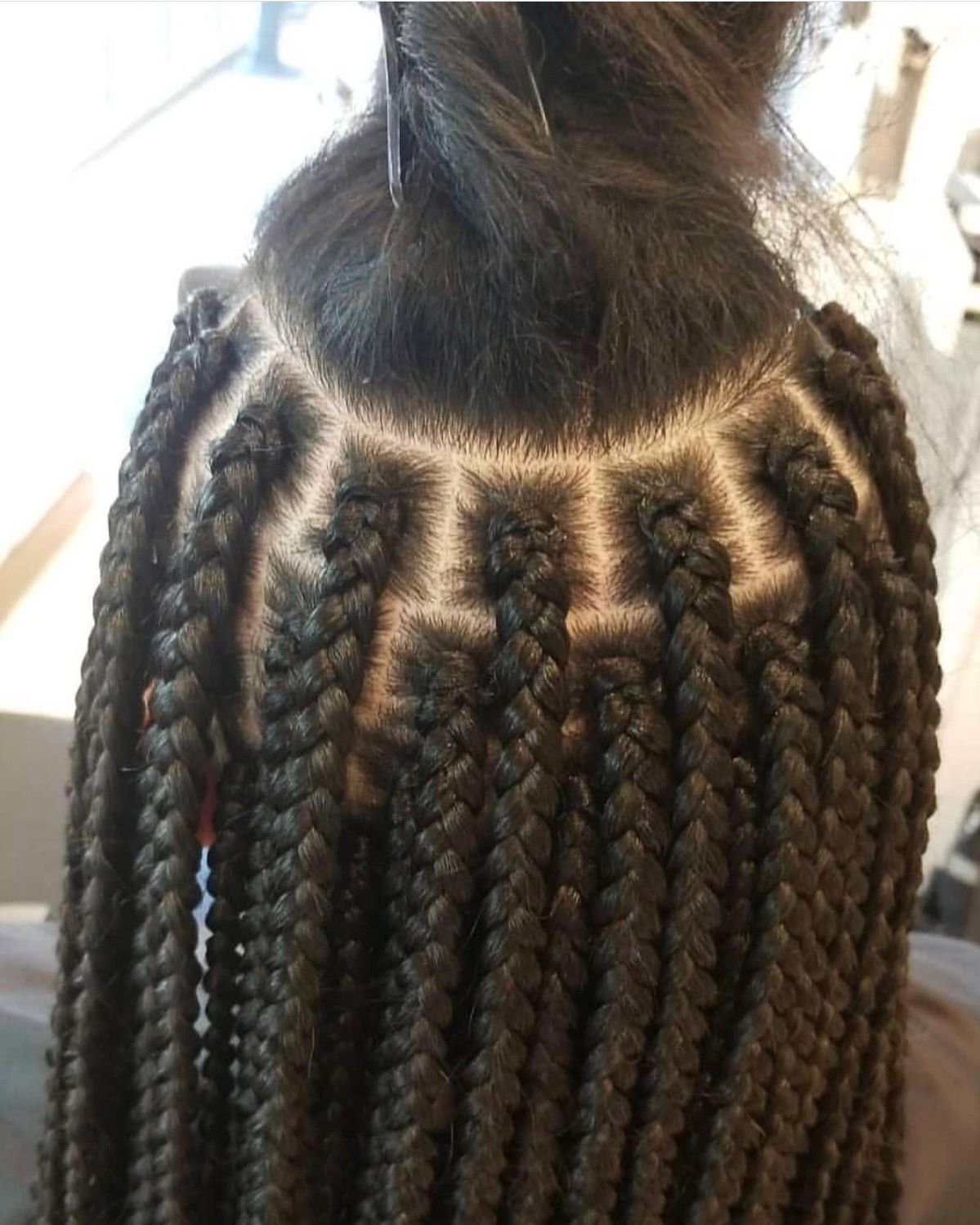
For box braids, the braider parts your hair into sections and immediately attaches the extension hair to the root using a knot. All the extension hair for that braid is introduced at the very beginning.
This means the full weight of the extension hair sits at the root from the first moment of installation.
The process is generally faster than knotless braid installation because of this straightforward approach.
Attaching a pre measured piece of extension hair at the root and braiding straight down is quicker per section. This is why box braids typically cost less than knotless braids at most salons.
Knotless Braid Installation
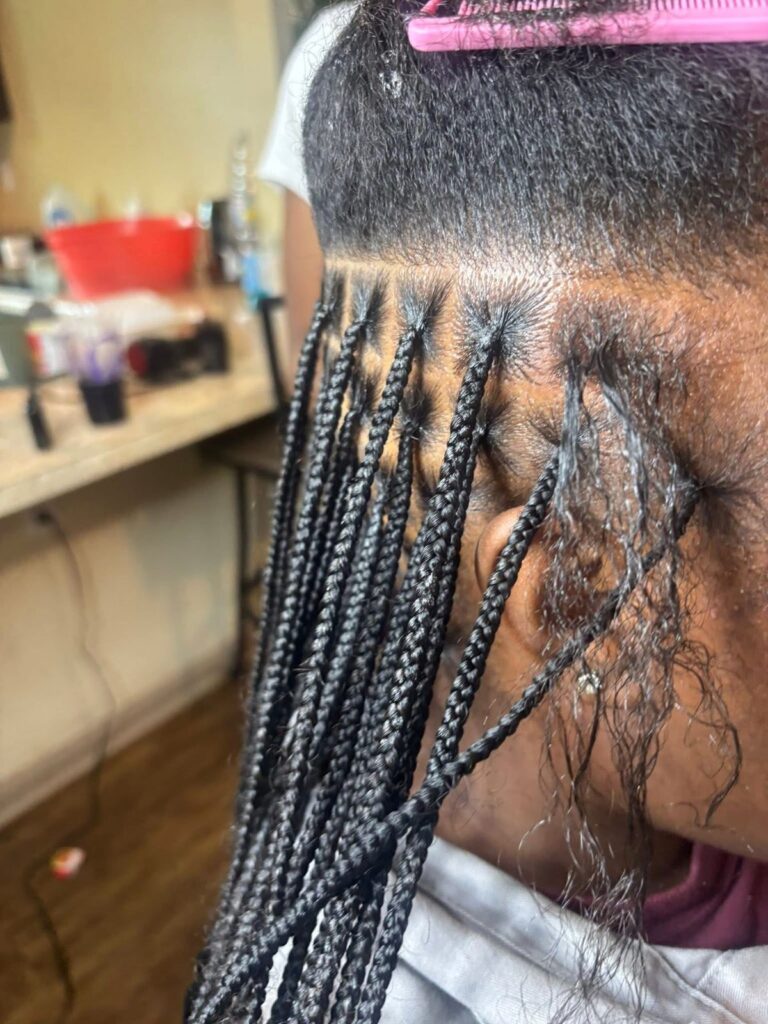
For knotless braids, the braider begins braiding with just your natural hair first. No extension hair is attached at the root at any point during installation.
Then small pieces of extension hair are added gradually, one piece at a time, as the braid progresses downward. Each piece is incorporated into the braid rather than tied at a single point.
This process takes longer than box braid installation because of the careful, methodical nature of the gradual feed in technique.
A knotless install typically takes one to two hours longer than box braids of the same size.
To understand how to care for your hair between sessions regardless of which style you choose, read Daily Habits That Keep Afro Hair Healthy. Those habits make a real difference to your hair health over time.
Tension and Scalp Health
This is arguably the most important difference between box braids and knotless braids. It has the most direct impact on the long term health of your hair and edges.
Tension With Box Braids
Traditional box braids create significant tension at the root of each braid from the moment of installation.
The knot concentrates the weight of all the extension hair at a single point right next to the scalp.
Over the weeks the style is worn, this concentrated weight pulls continuously on the follicles at each braid root. The scalp carries this tension every hour of every day for however long the braids are in.
This is why many people experience headaches, scalp soreness, and bumps along the hairline after getting traditional box braids.
The tension from the knots is immediately noticeable and takes time for the scalp to adjust to.
Over time and with repeated installs, this type of tension can weaken the follicles. It can cause traction alopecia, which is permanent hair loss from chronic pulling on the roots.
The edge area is particularly vulnerable because the braids nearest the hairline pull directly on the most delicate follicles.
Those follicles are naturally shallower and more easily damaged than the rest of the scalp.
Tension With Knotless Braids
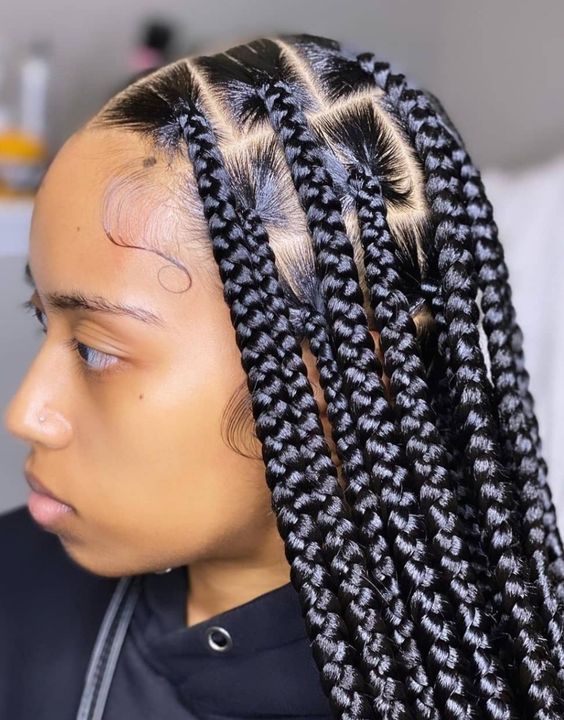
Knotless braids eliminate the heavy knot at the root entirely. This removes the concentrated tension point that makes traditional box braids potentially damaging over time.
Without a knot at the root, the weight of the extension hair is distributed along the length of the braid rather than sitting entirely at one point.
This makes the braids feel significantly lighter and more comfortable from the moment of installation.
The absence of a root knot also means the braids can be installed much closer to the scalp without creating painful pressure. This gives a neater and more natural appearance at the root.
Knotless braids can still be installed too tightly if the braider uses too much tension during the natural hair passes.
Low tension is still essential even with knotless braids throughout the entire installation process.
To understand how protective styling generally impacts your Afro hair health and growth, read The Ultimate Beginner’s Guide to Afro Hair Care. It gives important context that makes this comparison even clearer.
Appearance and Aesthetics
Both styles look beautiful when well installed but they have distinct aesthetic differences.
One may be more appealing than the other depending on your personal preference and the occasion you are styling for.
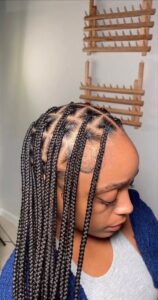
How Box Braids Look
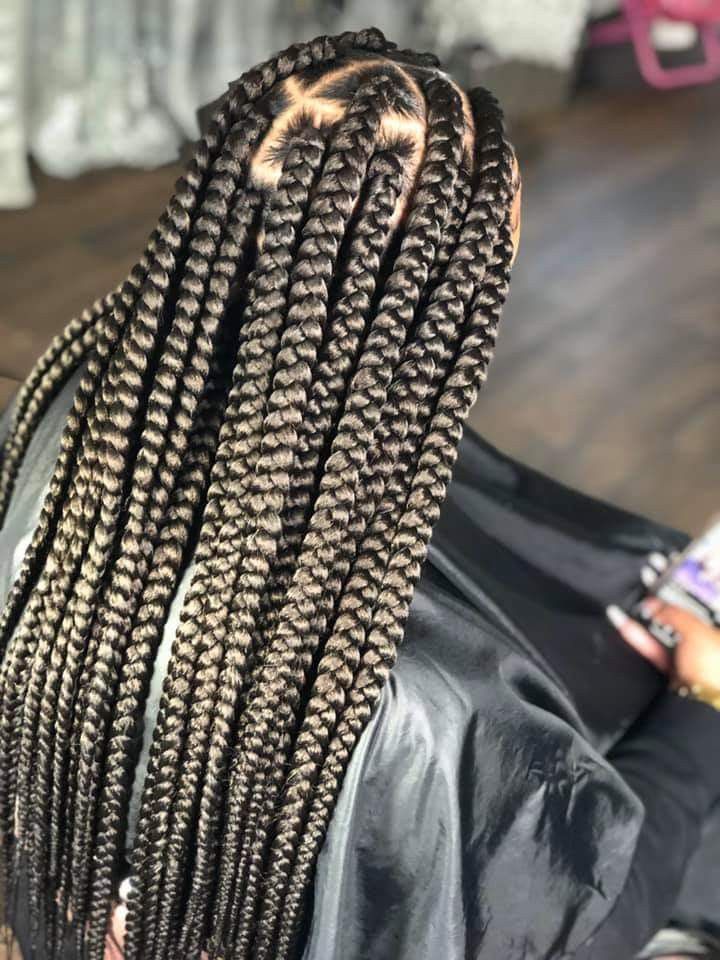
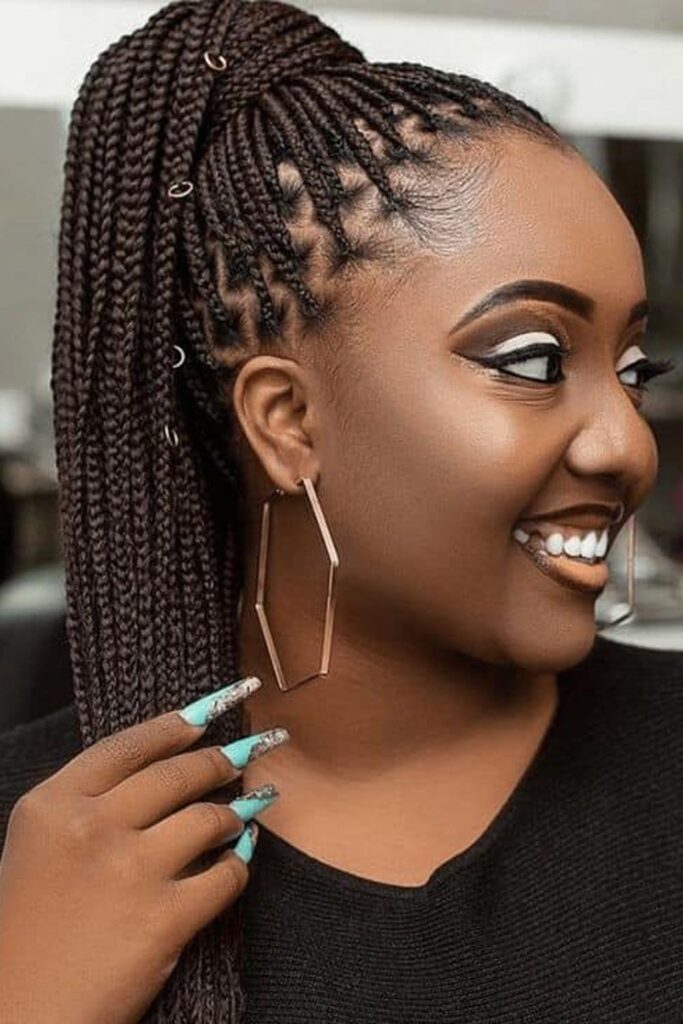
Box braids are immediately full and thick from the very root of the braid down to the tip.
This gives a very full, dramatic, and voluminous appearance that makes a strong visual statement from the first day of installation.
The knot at the root is visible when you look closely at the scalp, especially in the first few weeks.
Some people don’t mind this while others find it less appealing than the cleaner root appearance of knotless braids.
Box braids have a very defined, structured look that photographs beautifully.
They have a timeless quality that comes from decades of being worn and loved as one of the most iconic natural hair styles worldwide.
How Knotless Braids Look
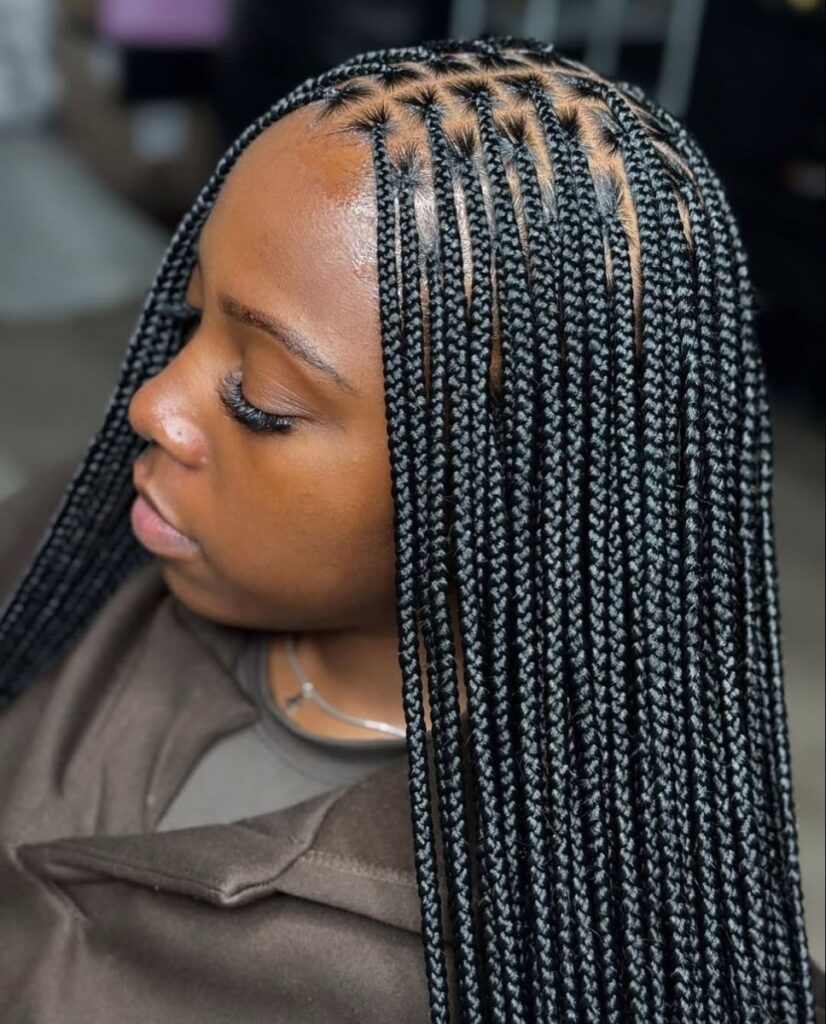
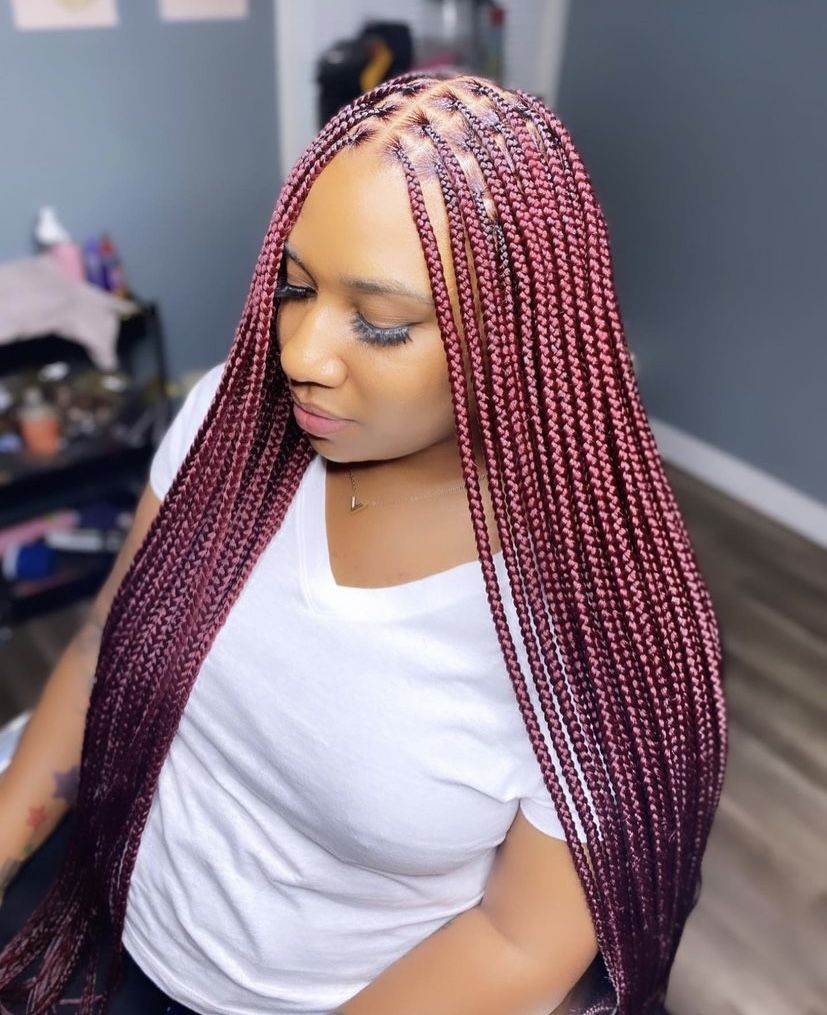
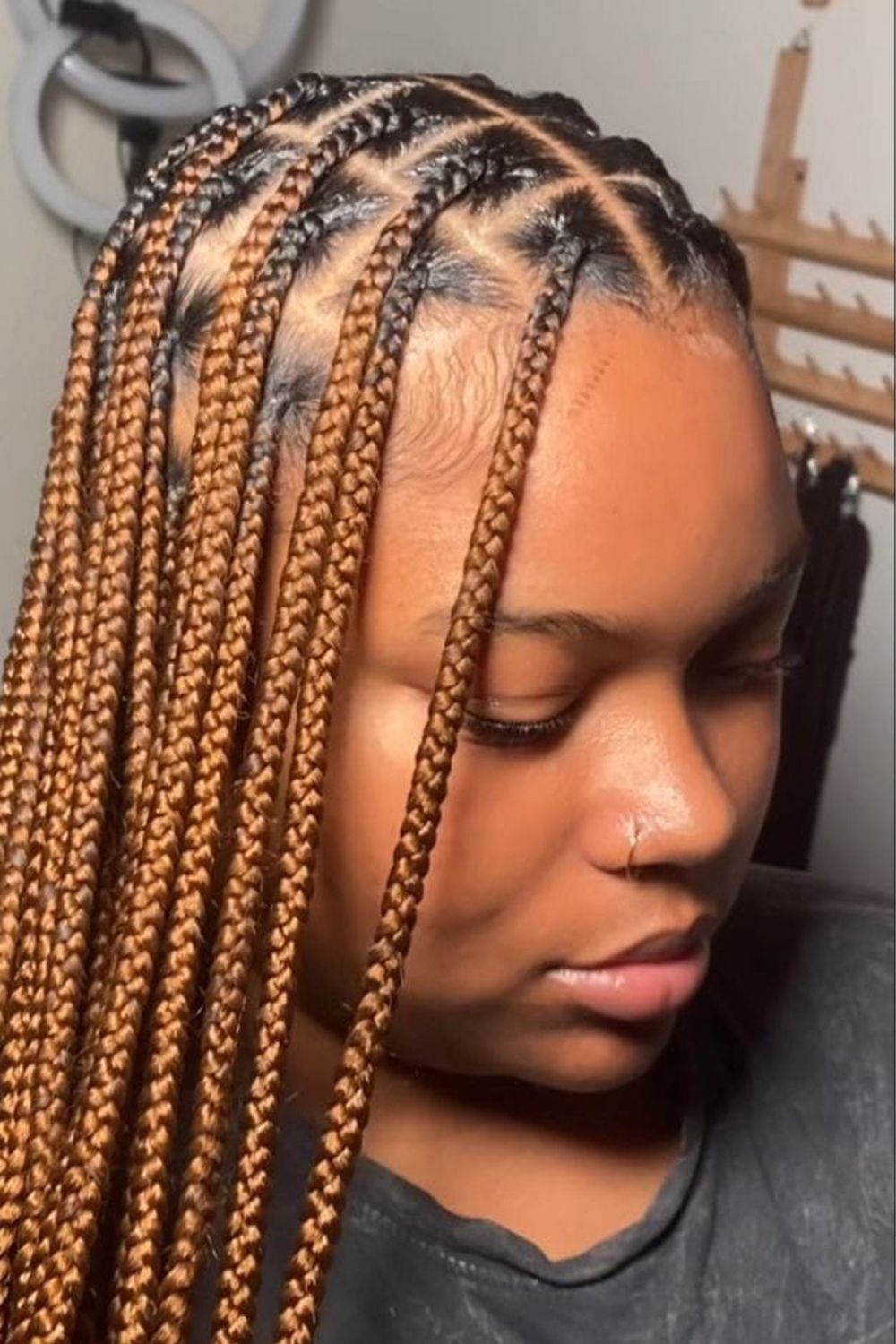
Knotless braids start very thin and natural at the root and build gradually in thickness as they progress down the length.
This gives a much more realistic and natural looking appearance especially near the scalp.
There is no visible knot at the root which gives a very clean, polished look at the scalp.
Many people find this more appealing than the knot root of traditional box braids, especially up close.
The overall appearance of knotless braids moves more naturally than traditional box braids. The absence of the heavy knot allows each braid to swing and move more freely throughout the day.
For style inspiration on how to wear either braid style in different ways, check out 75 Beautiful Afro Hairstyles You’ll Want to Save. It covers a wide range of styling options for both styles.
Cost Comparison
The cost difference between box braids and knotless braids is one of the most practically significant differences for most people.
It is often the deciding factor when making a choice between the two styles.
Why Knotless Braids Cost More
Knotless braids consistently cost more than traditional box braids of the same size and length at most salons.
The price difference can range from a small premium to a significantly higher cost depending on the braider and location.
The higher cost comes directly from the longer installation time required by the gradual feed in technique.
A braider can install traditional box braids faster because the knot and go method is quicker per section.
Since braiders charge for their time, the additional hours required for a knotless install translate directly into a higher service cost.
This is worth understanding before your appointment so you can budget accordingly.
Is the Extra Cost Worth It
For most people, yes. The reduced tension, the more natural appearance, and the improved comfort during wear are benefits that justify the higher cost significantly.
This is especially true for people whose edges are already thin or sensitive. It also applies to those who have experienced scalp soreness with traditional box braids in the past.
For people with very strong, resilient scalps who have never experienced tension related issues with box braids, the cost difference may be the deciding factor in choosing between the two.
To understand how to wash your hair and care for your scalp between braid installs, read How Often Should You Wash Afro Hair?. Getting this right makes a real difference to the health of your hair between styles.
Wear Time Comparison
Both styles can last the same maximum wear time when properly installed and maintained. There are some practical differences in how they hold up over the weeks they are worn though.
Box Braid Wear Time
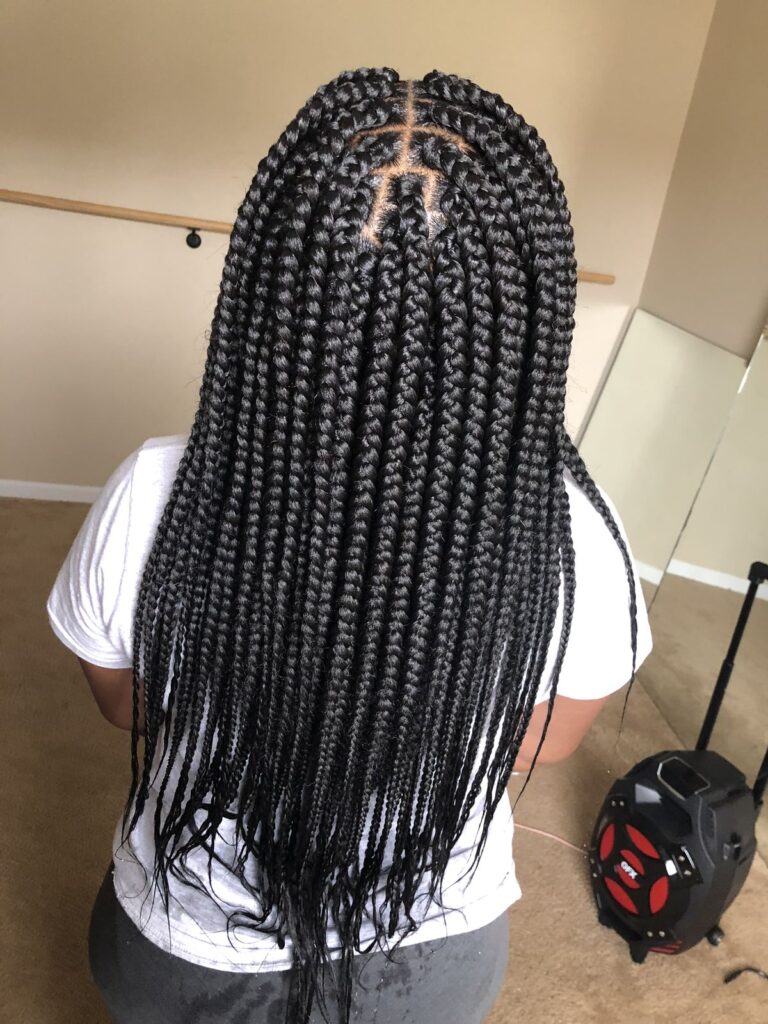
Traditional box braids typically last four to eight weeks depending on the size of the braids and the quality of the extension hair used.
How well the style is maintained throughout the wear period also matters significantly.
Small box braids tend to last longer than larger ones because the smaller sections hold their pattern more neatly for longer.
The new growth is also less visually obvious at smaller braid sizes throughout the wear period.
The knot at the root of each braid can become more visible and pronounced as new growth comes in. This can make the style look less neat earlier than a knotless install of the same size.
Knotless Braid Wear Time
Knotless braids also last four to eight weeks depending on size, extension hair quality, and maintenance.
The wear time is similar to traditional box braids when both are properly installed and cared for.
One practical advantage of knotless braids during the wear period is that the absence of a root knot means the new growth blends more smoothly as it comes in.
The style looks neat for longer even as the weeks pass.
The gradual taper at the root of each knotless braid naturally accommodates new growth better than the immediate full thickness of a traditional box braid root with its visible knot.
For ideas on what to do with your hair on the days leading up to your next braid install, read 31 Quick Natural Hairstyles for Busy Mornings. These styles are fast, easy, and perfect for the in between period.
Takedown Comparison
The process of removing box braids and knotless braids has some differences worth understanding before you commit to either style.
Knowing what to expect makes the experience much smoother and less damaging overall.
Taking Down Box Braids
Taking down traditional box braids requires carefully cutting or unraveling the knot at the root of each braid. The extension hair can only be removed from the natural hair once the knot is dealt with first.
If the braids have been worn too long and the extension hair has started to mat around the natural hair at the root, takedown becomes very challenging.
It can cause significant breakage if not done carefully and patiently throughout.
Apply generous amounts of detangling conditioner or oil to each braid before removal.
Unravel from the tip toward the root and work slowly rather than pulling or forcing the extension hair off at any point.
Taking Down Knotless Braids
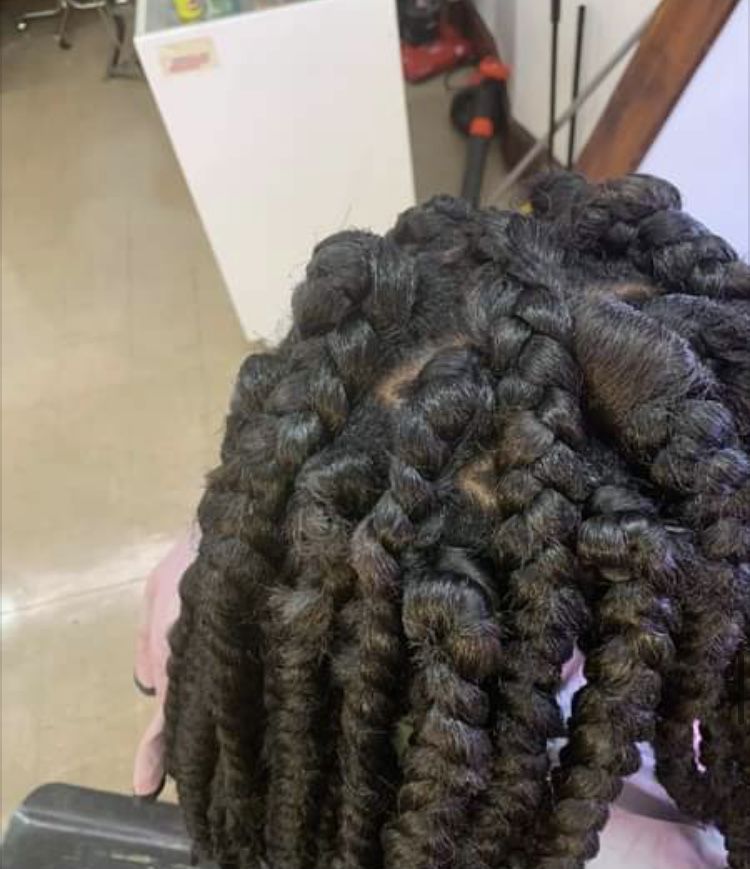
Knotless braid takedown is generally easier than traditional box braid takedown because there is no knot at the root to deal with.
The extension hair was fed in gradually rather than tied on at a single point.
The natural hair at the root of a knotless braid is typically less tangled with the extension hair.
The absence of a knot means separation during takedown is easier and less damaging overall than box braid removal.
Apply detangling oil or conditioner before starting the takedown of knotless braids just as you would for box braids. Work patiently from tip to root on each section for the best and safest result.
After taking down either style, do a thorough wash day before installing anything new.
Read The Complete Wash Day Routine for Afro Hair for a full step by step guide on exactly what to do after protective style removal.
Which Is Better for Your Edges
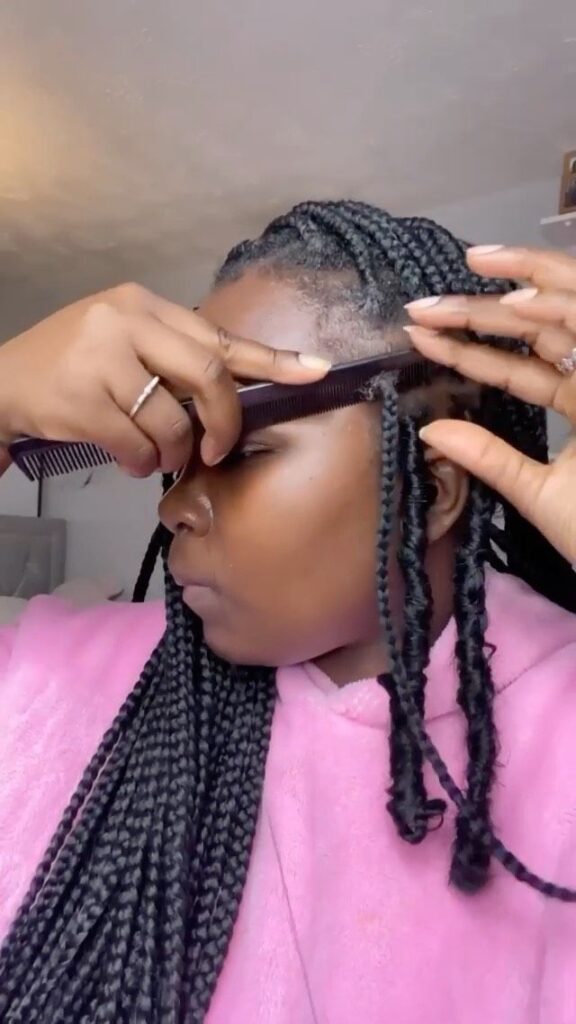
The health of your edges is one of the most important considerations when choosing between box braids and knotless braids.
Edge damage is one of the most visible and emotionally difficult consequences of poor protective styling choices.
Box Braids and Edge Health
Traditional box braids put the most tension on your edges through the knots closest to your hairline.
The braids installed along the perimeter of the style pull most directly on the hair follicles in the edge area.
People who have had their box braids installed too tightly repeatedly over time are among the most common cases of traction alopecia seen by hair care professionals.
The edge area is consistently the most damaged zone.
This doesn’t mean box braids always damage edges. Properly installed, low tension box braids by a skilled braider are far less damaging than poorly installed ones.
But the structure of the style does put edges at more risk.
Knotless Braids and Edge Health
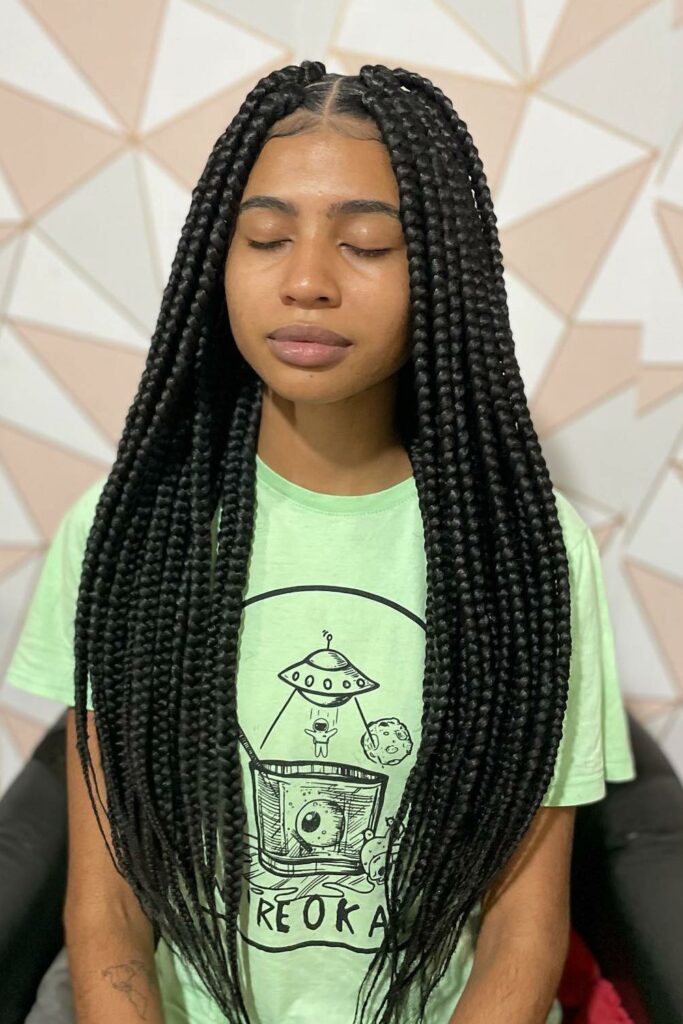
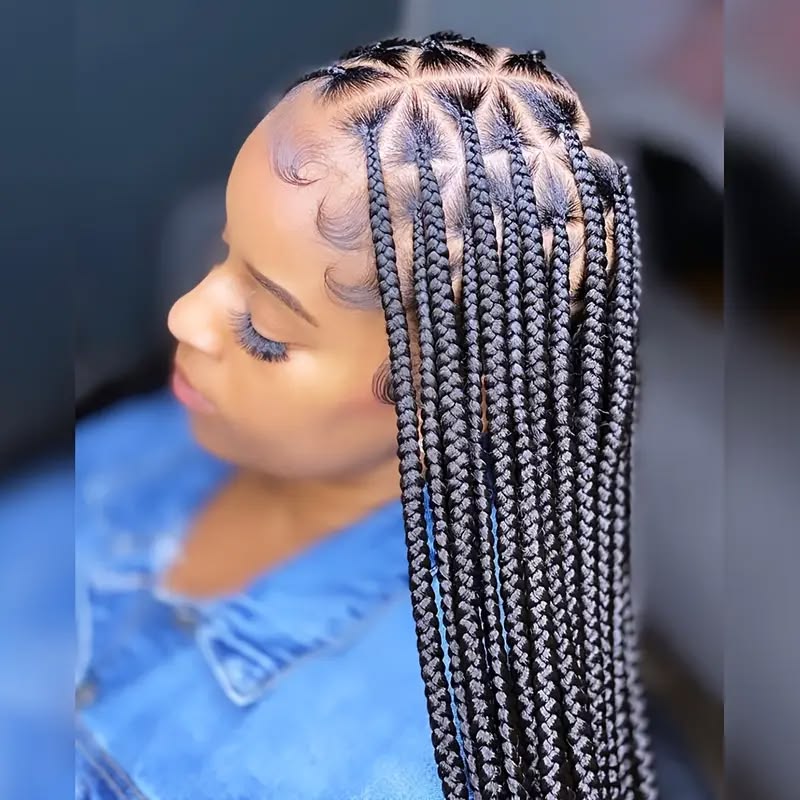
Knotless braids are significantly better for edge health than traditional box braids. The absence of a root knot removes the heaviest point of tension from the most vulnerable area of the hairline.
The braids along the perimeter of a knotless install sit much more gently on the hairline than traditional box braid knots do.
This is why knotless braids are consistently recommended for people whose edges are already thin or damaged.
Even with knotless braids, the edge area should always be installed with the least tension of anywhere on the head.
Always ask your braider specifically to be gentle along your hairline regardless of which style you’re getting.
For protective style ideas that specifically protect your edges, read Feed-In Braids That Protect Your Edges. It covers one of the most edge friendly installation methods available for Afro hair.
Which Style Is Right for You
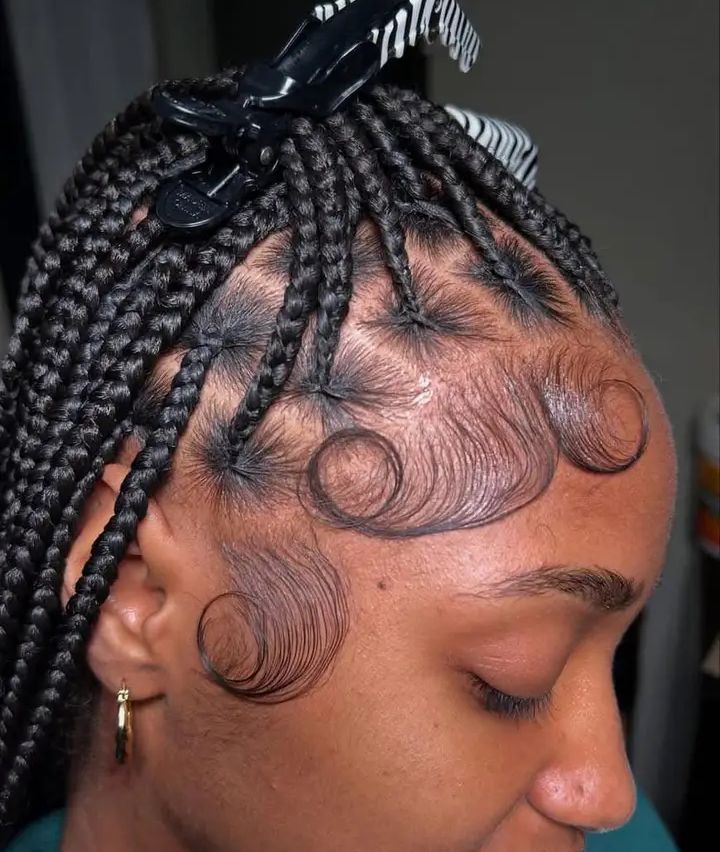
The answer depends on several factors specific to your hair, your history with protective styles, your budget, and your personal preferences. There is no single right answer for everyone.
Choose Knotless Braids If:
Your edges are thin, sensitive, or recovering from previous tension damage.
The reduced root tension makes knotless braids significantly safer for compromised hairlines than traditional box braids in every way.
You have experienced headaches, scalp soreness, or bumps along your hairline after previous box braid installs.
These are clear signs your scalp and edges don’t respond well to traditional box braid tension at all.
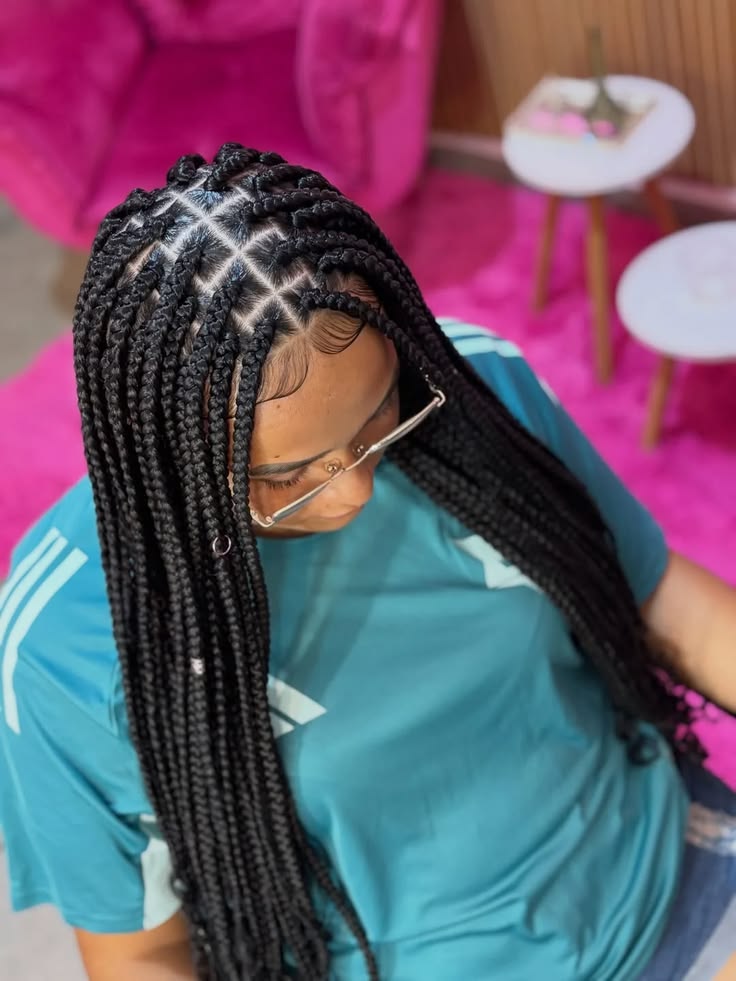
You want a more natural, realistic appearance at the root. The gradual build and absence of a visible knot gives knotless braids a more organic look that many people strongly prefer aesthetically over box braids.
Choose Box Braids If:
Your edges and scalp are strong and resilient and you have never experienced tension related issues with traditional box braids.
A skilled braider who installs at low tension is always key to a safe and comfortable experience.
Budget is an important factor and the cost difference between knotless and box braids is significant enough to make box braids the more practical choice for your current situation and lifestyle.
You love the classic, full from root to tip appearance of traditional box braids and prefer that aesthetic over the more gradual build of knotless braids from root to tip.
For beginner friendly styling ideas to wear between braid installs while your hair rests, read 35 Easy Afro Hairstyles for Beginners. These styles are simple, protective, and easy to manage at home.
The Most Important Thing Regardless of Which You Choose
Whether you choose box braids or knotless braids, the rules of good protective styling apply equally to both. These rules are non negotiable regardless of which style you’re getting installed.
Always start with clean, deeply conditioned hair. Never install either style on dirty or dry hair that will be trapped under braids for several weeks at a time without proper preparation.
Always prioritize low tension during installation. No braid style is worth the edge damage that comes from consistent tight installs regardless of whether there is a knot at the root or not.
Always care for your scalp and accessible hair throughout the wear period. Moisturize regularly, wash your scalp every two to three weeks, and protect your braids with a satin bonnet every single night.
Always take the style down gently and on time. Never go past eight weeks with either style and always apply detangling product generously before beginning the removal process on any section.
Always give your hair rest time between protective style installs.
At least one to two weeks of wearing your hair loose between braided styles allows your scalp and edges to recover properly before going back under tension.
You will need this: 25Afro Puff Hairstyles You’ll Love.
A Few Final Things Worth Knowing
The best style between box braids and knotless braids is the one your specific hair can handle comfortably.
Your budget and access to a skilled braider at the right tension level also matter significantly.
Trends come and go in natural hair styling. What matters more than what’s popular is what actually protects and supports the health of your specific hair over time without compromise.
Go back and look honestly at how your hair and edges have responded to whichever style you’ve been getting.
If your edges have been thinning or you’ve been getting headaches after installs, something needs to change immediately.
Your hair will always tell you what it needs if you pay attention. Listen to it and make your protective styling choices accordingly every single time without exception.
For more guidance on building the complete routine that supports your hair between every braid install, read How to Build the Perfect Afro Hair Care Routine.