
How to Build the Perfect Afro Hair Care Routine
Disclosure: Some of the links in this post are affiliate links. This means if you click on the link and purchase an item, I will receive an affiliate commission at no extra cost to you.
Caring for your hair the right way is the easiest way to get the kind of hair you desire. Most people desire good hair but don’t know how to go about their hair care routine.
You might be going about it the wrong way without knowing, which makes all your efforts not showing, and I know it can be disappointing.
You wash, you oil, you try new products, but nothing really changes. The truth is, it’s not always about the products. Most times, it’s about the routine behind them.
A good hair care routine is like a plan. Without a plan, you’re just doing random things and hoping something works. But when you have a clear routine that matches your hair type and your life, everything starts to make sense.
Think about it this way. If you were trying to lose weight, you wouldn’t just eat randomly and expect results. You would follow a plan, eat the right things at the right time, and stay consistent.
Hair care works the same way. You need the right steps, in the right order, done consistently, for your hair to actually respond.
A lot of people also make the mistake of giving up too soon. They try a routine for two weeks, see no big change, and switch to something else. Then the cycle repeats. Your hair needs time to respond to care, and jumping from one routine to another never gives it that time.
This guide is going to walk you through how to build a routine that actually works for Afro hair, step by step, in a way that’s easy to follow and easy to stick with.
If you haven’t read The Ultimate Beginner’s Guide to Afro Hair Care yet, start there first. It covers the basics that this guide builds on.
How to Build the Perfect Afro Hair Care Routine
1. Know What Your Hair Needs Before You Build Anything
The biggest mistake people make when building a routine is copying someone else’s without checking if it fits their own hair.
Your hair is different from your friend’s hair. It might look similar, but the way it responds to products, how fast it dries out, how much moisture it needs, all of that can be completely different.
Before you build your routine, ask yourself a few simple questions.
How does my hair feel most of the time, dry or okay? How fast does my hair dry out after I moisturize it? Does my scalp get itchy or flaky often? Does my hair break a lot when I comb it?
Your answers to these questions will shape your whole routine. Someone whose hair dries out fast needs to moisturize more often than someone whose hair holds moisture well.
Someone with a flaky scalp needs to wash more often than someone whose scalp stays clean for longer.
Take a week to just observe your hair before you start building. Notice how it feels each day, how it looks, and how it responds to what you’re already doing.
That information is more useful than any routine you find online.
Take a look at this: 25 Afro Puff Hairstyle You’ll Love

2. Build Your Routine Around These Four Pillars
Every good Afro hair care routine is built on four things. Cleansing, moisturizing, protecting, and trimming. Everything else sits around these four.
If your routine is missing any one of these, it will show in your hair over time. Skipping cleansing leads to buildup, when you Skip moisture, it leads to dry, brittle hair.
Skipping protection leads to breakage and Skipping trims leads to split ends that travel up and break the strand.
Think of these four things as the base of your routine. Every product you buy and every step you add should support at least one of them.
For a full picture of what wash day should look like as part of your cleansing step, read The Complete Wash Day Routine for Afro Hair.
3. Set Up Your Wash Day
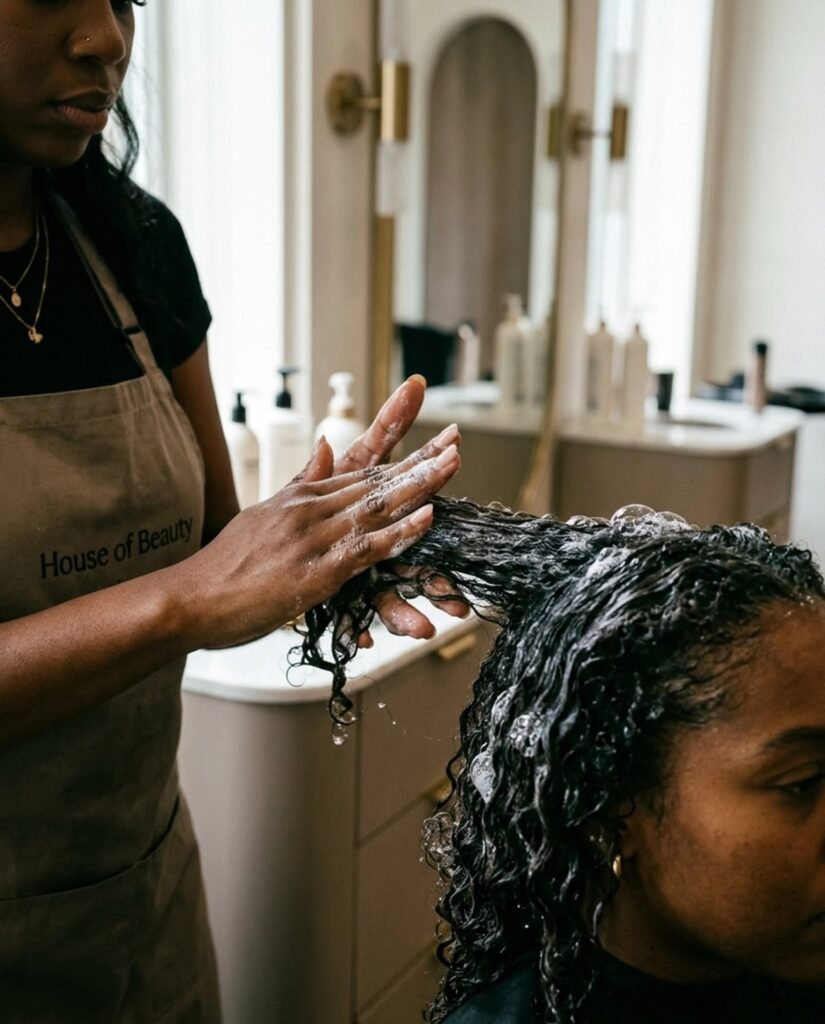
Wash day is the most important day in your hair care routine. Everything else during the week supports what happens on wash day.
For most people with Afro hair, washing once a week or once every two weeks works well. If your scalp gets oily or itchy fast, lean toward once a week.
If your hair is very dry and fragile, every two weeks might be better.
Pick a day that works for your schedule and stick with it. Wash day takes time, so choose a day when you’re not rushing.
A client of mine used to wash her hair on random days whenever she felt like it. Some weeks she washed twice, other weeks she skipped it completely.
Her hair never had a chance to settle into a proper rhythm. Once she picked one day every week and stuck with it, her hair started responding much better.
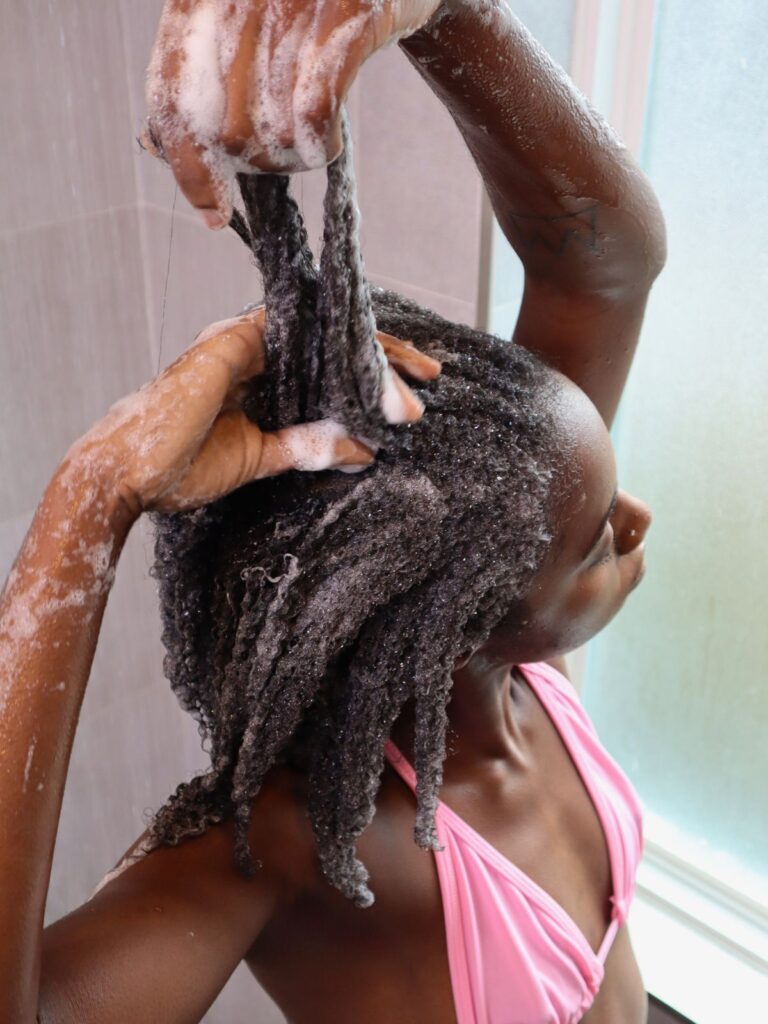
Your wash day should always follow this order: detangle first, then shampoo, then condition, then deep condition, then moisturize. Never skip steps, and never rush through them.
You will love this: Knotless braids: Complete Beginner’s Guide

4. Pick the Right Products for Your Hair
You don’t need many products. You need the right ones.
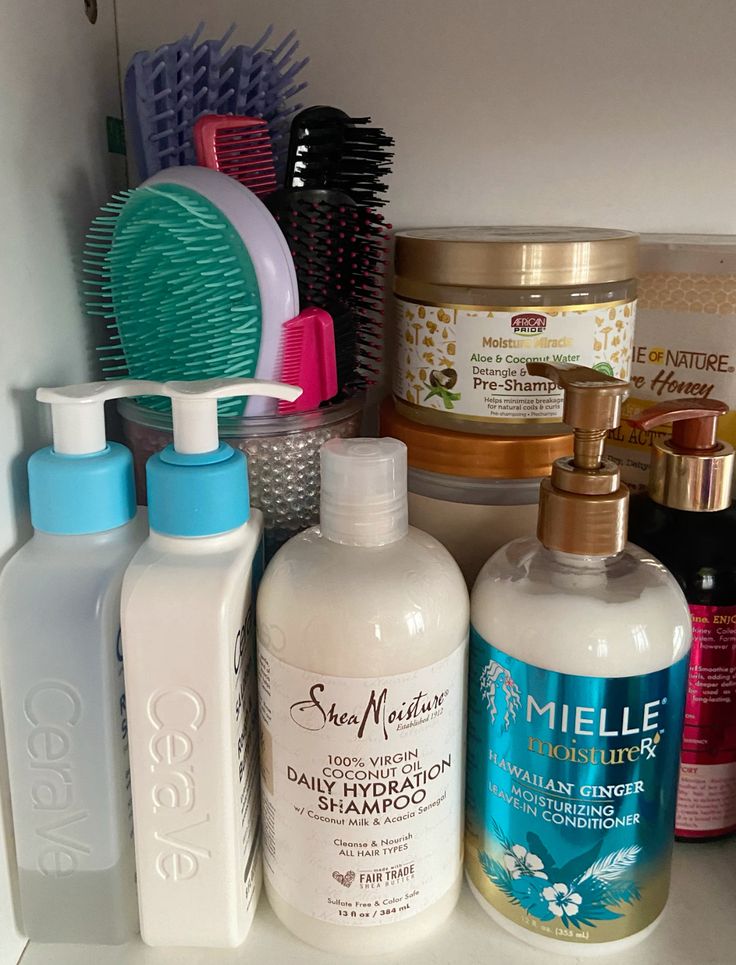
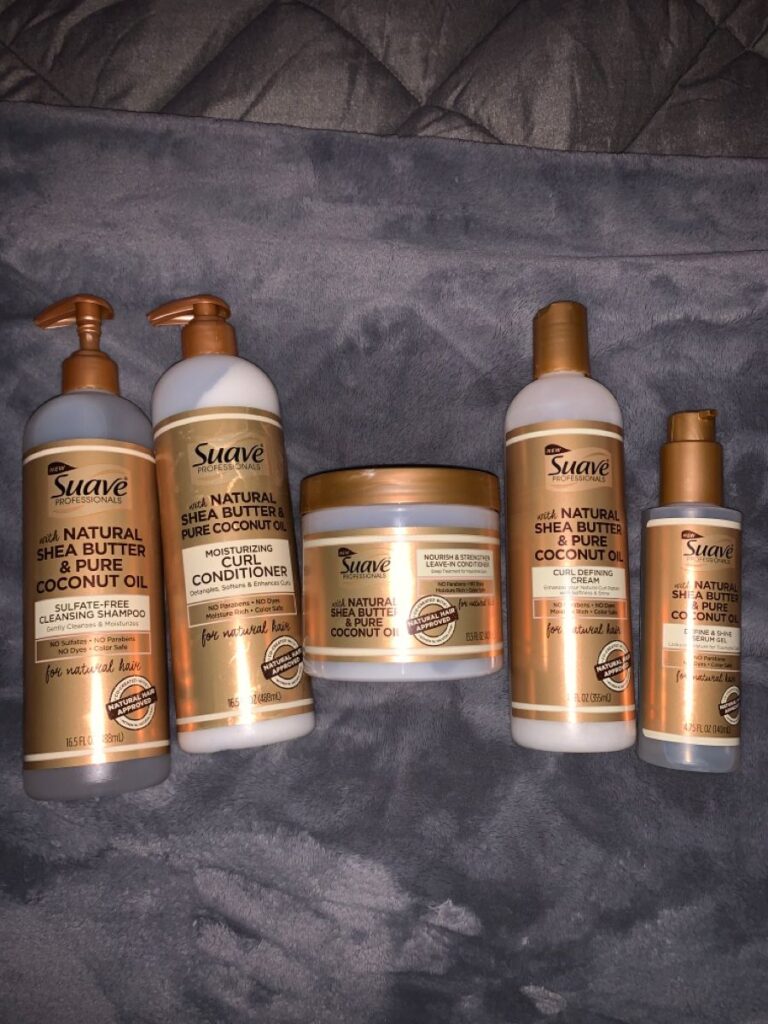
As a beginner, your product shelf should have six things and nothing more.
A gentle shampoo, a regular conditioner, a deep conditioner, a leave in conditioner, an oil, and a butter or cream for sealing.
Once you have these six, resist the urge to keep adding more. More products don’t mean better hair.
They often mean more buildup, more confusion, and more money spent on things that don’t help.
When picking a shampoo, look for one that cleans without leaving your scalp feeling tight and dry after.
When picking a conditioner, look for one that makes your hair feel soft and easy to comb through while it’s in.
Give every new product at least a month before deciding if it works.
Hair doesn’t always respond to new things right away, so be patient before throwing something out or replacing it.
For help understanding how often your washing schedule should match your products, read How Often Should You Wash Afro Hair?.
5. Build a Moisture Routine You Can Do Daily
Wash day takes care of deep cleaning and deep conditioning. But moisture is something your hair needs every single day, not just once a week.
The LOC method is the best place to start. Apply a leave in conditioner to damp hair first, then seal with an oil, then add a cream or butter on top.
This order makes sure moisture gets into the hair and stays there.
Keep a spray bottle with water and a little leave in conditioner mixed in. Use it every morning to refresh your hair before you style it or before you start your day.
My friend used to wonder why her hair felt soft right after wash day but dry and rough just two days later.
It’s because she wasn’t doing anything between wash days, after the wash day she will relax and wait for the next wash day. But once she started using her spray bottle every morning and sealing with a light oil, her hair stayed soft all week.
The goal of your daily moisture routine is simple. Wet, seal, protect. Those three steps done consistently will change how your hair feels faster than any single product ever could.
For more on daily habits that support moisture, read Daily Habits That Keep Afro Hair Healthy.
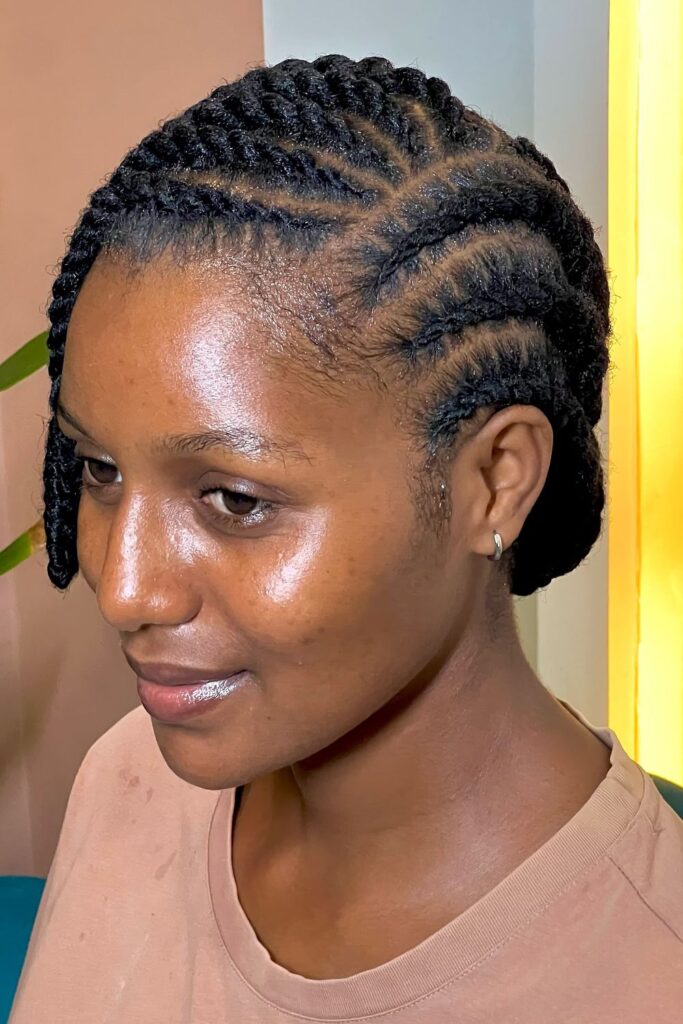
6. Don’t Skip Protective Styling
A routine without protective styling is like a plan with a gap in it. You can do everything else right, but if you’re handling your hair too much every day, you’ll keep losing the length you’re trying to build.
Protective styles tuck your ends away and reduce daily touching, pulling, and rubbing. This gives your hair a real break and helps it hold onto length over time.
You don’t have to be in a protective style every single day. But aim to spend at least two weeks out of every month in one. Braids, twists, buns, and cornrows all count.
When you are in a protective style, don’t forget your hair underneath. Moisturize your scalp every few days, and don’t leave the style in longer than six to eight weeks.
To learn more about protective styling and how to do it right, read Everything You Need to Know About Protective Styling.
7. Add Deep Conditioning to Your Routine Every Week
Deep conditioning is the step that separates hair that just survives from hair that actually thrives.
A regular conditioner works on the outside of your hair strand. A deep conditioner goes inside and adds back strength and softness that washing and daily handling slowly remove.
Use a deep conditioner every wash day if your hair is dry or damaged. If your hair is in okay condition, once or twice a month is fine.
Apply it generously after shampooing, cover every section. Then put on a plastic cap and sit with it for at least twenty to thirty minutes. Don’t rush this step.
Rinse with cool water when you’re done. Cool water closes the hair back up and helps lock in everything the deep conditioner just put in.
Read Next: Box Braids vs Knotless Braids: Which is Better?
8. Protect Your Hair at Night
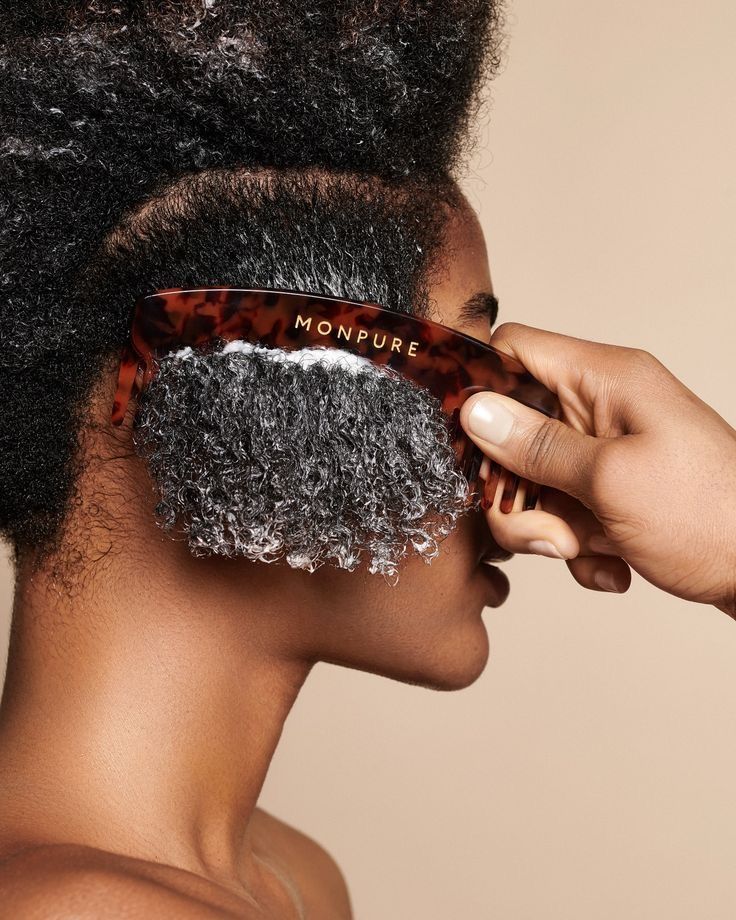
A lot of people build a solid daytime routine and then sleep on a cotton pillowcase and undo half of it overnight.
Cotton pulls moisture out of your hair and creates friction that breaks strands while you sleep.
Switching to satin or silk is one of the smallest changes you can make with one of the biggest results.
Get a satin pillowcase or a satin bonnet. Either one works. The goal is to keep your hair from rubbing against rough fabric all night.
Also put your hair in a loose protective style before bed. A pineapple, loose twists, or a low bun all help keep your hair together and reduce tangling overnight.
This step takes less than five minutes, but it protects everything you spent your whole day building.
For easy styles to wear at night that keep your hair safe, read 27 Wash and Go Hairstyles That Actually Last.

9. Trim on Schedule
Trimming feels like it goes against growing your hair, but it’s one of the most important parts of a good routine.
Split ends break. And when they break, they take more hair with them than a trim ever would.
Skipping trims to save length almost always results in losing more length in the long run.
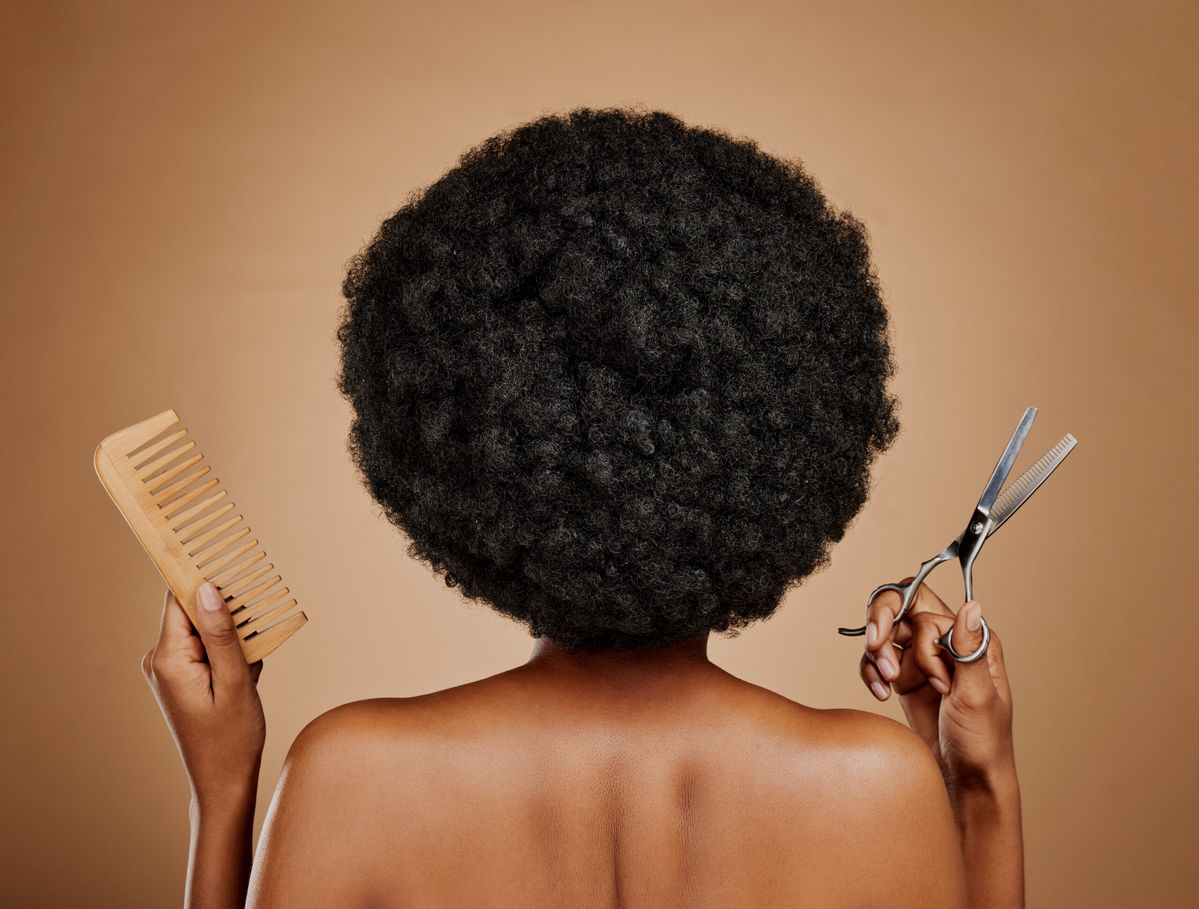
Trim every eight to twelve weeks. You don’t need to take off much, just the thin, rough ends that have started to split.
Always trim on stretched hair. Trimming tightly coiled hair without stretching it first makes it hard to see where the damage actually starts.
If you’re not comfortable trimming your own hair, visit a stylist who understands Afro hair.
Don’t let anyone trim more than you’re comfortable with. Small and regular is always better than big and rare.
Don’t Miss: Feed-In Braids That Protects Your Edges
10. Track Your Progress
One of the most discouraging things about building a hair care routine is feeling like nothing is happening. Afro hair grows slowly and shrinks a lot, so progress is often hard to see.
Take a photo of your hair at the start of your routine. Then take another one every four weeks. Compare them over time, not day to day.
Also pay attention to how your hair feels, not just how it looks. Is it softer than it was two months ago? Does it break less when you detangle? Does your scalp feel healthier? These are all signs your routine is working, even before you can clearly see the length.
Don’t change your routine every few weeks because you’re not seeing fast results. Give it at least three months of consistency before making any big changes.
For style ideas to keep you inspired while your routine does its work, read 75 Beautiful Afro Hairstyles You’ll Want to Save.
11. Adjust Your Routine With the Seasons
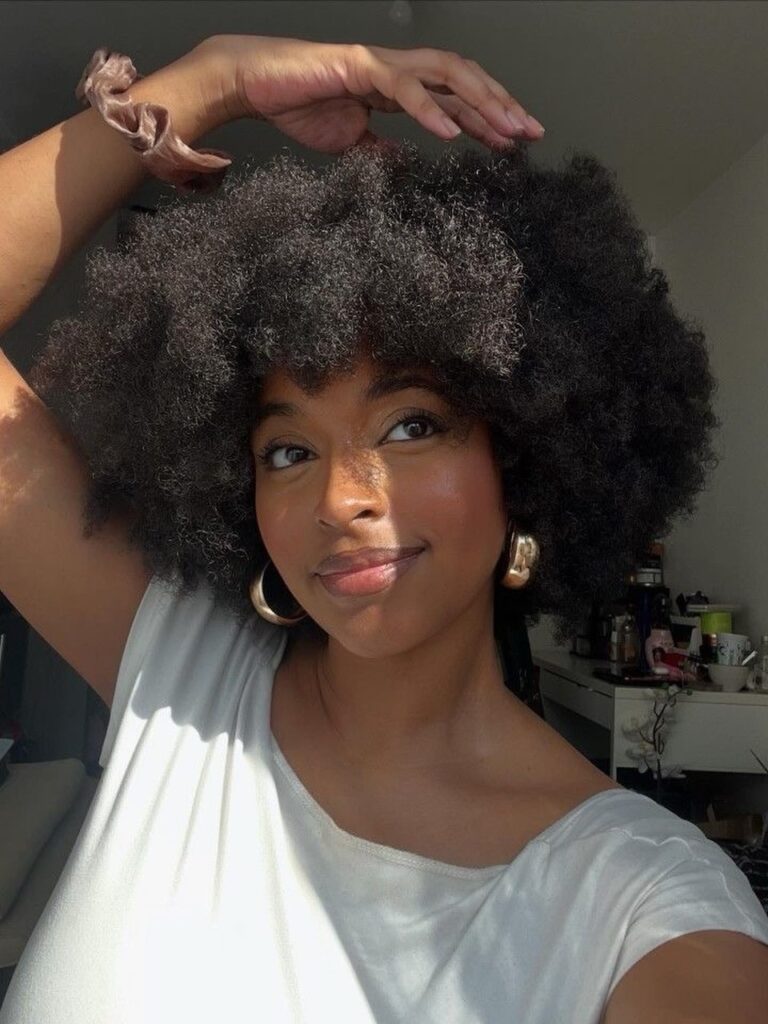
Your hair doesn’t need the same things all year round. What works in a hot, dry month might not work as well in a cool or rainy one.
In dry months, your hair loses moisture faster. You might need to moisturize more often and use heavier products to seal it in.
In humid months, your hair might pick up moisture from the air more easily. You might not need as much product, but you may need to pay more attention to frizz and definition.
Check in with your hair at the start of each new season. Notice if it feels different from the last few months, and adjust your products or frequency if needed.
For quick styles that work across different seasons, read 31 Quick Natural Hairstyles for Busy Mornings.
12. Keep It Simple and Stay Consistent
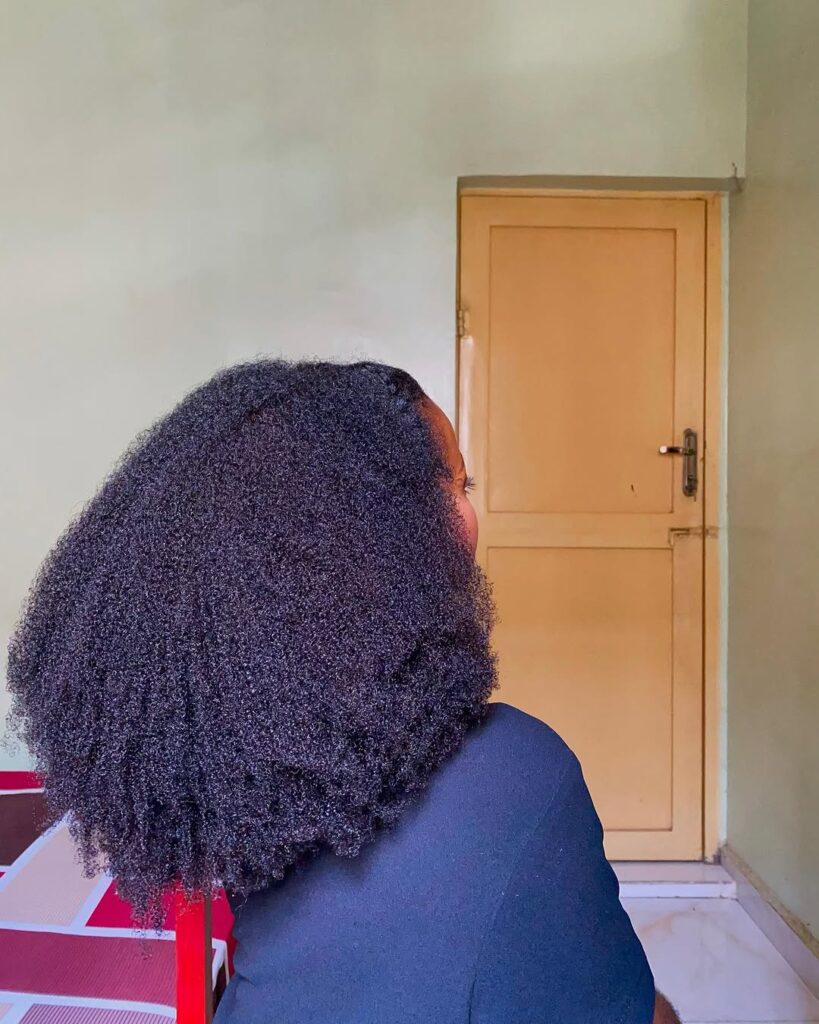
The best hair care routine is one you can actually stick with. It doesn’t need to be long or complicated. It just needs to be consistent.
If your routine takes three hours every time you do it, you’ll start skipping it. Build something that fits your real life, not an ideal version of it.
Start with the basics. Wash, condition, moisturize, protect, and trim. Get those five things right first before adding anything extra.
Then do it again next week. And the week after that. Consistency is what changes hair, not complexity.
For easy styles to wear while keeping your routine simple, read 35 Easy Afro Hairstyles for Beginners.
A Few Final Things Worth Knowing
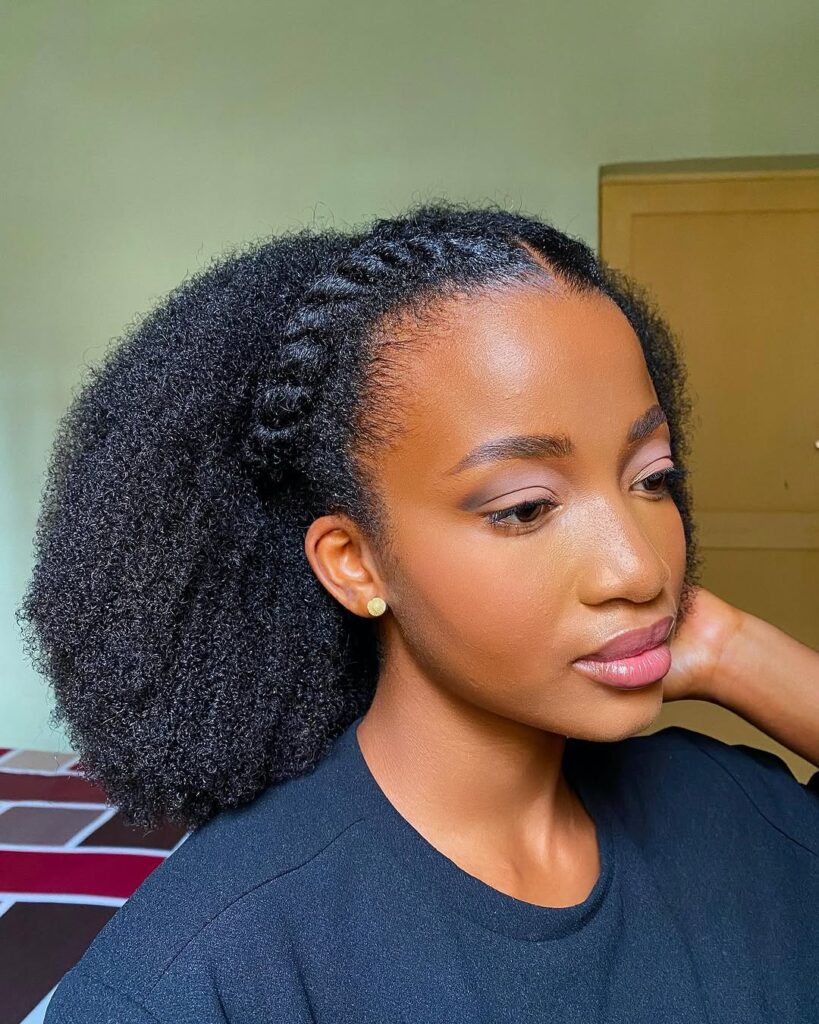
Building the perfect Afro hair care routine doesn’t happen in one day. It builds over time as you learn more about your hair and what it responds to.
Be patient with yourself, especially at the start. You will make mistakes, buy products that don’t work, and have bad hair days. That’s all part of the process.
What matters is that you keep showing up. Keep learning, keep adjusting, and keep going even when it feels slow.
Your hair will respond to consistent care. It always does. You just have to give it the time it needs.
For protective style ideas to support your routine, check out 27 Best Protective Styles for Afro Hair.